Business Details
32 Years
experience
Emergency
services
Wildlife Rehabilitation & Education Center in Oconomowoc, WI
The Wildlife In Need Center (WINC) has been dedicated to wildlife rehabilitation and environmental education since 1994. Our mission focuses on rescuing, rehabilitating, and releasing injured or orphaned Wisconsin wildlife while promoting coexistence through educational programs. With over 30 years of experience, our team of licensed professionals and volunteers has cared for more than 71,500 animals across 140 species, emphasizing hands-on learning and community engagement. We operate under licenses from the Wisconsin Department of Natural Resources, U.S. Fish and Wildlife Service, and U.S. Department of Agriculture, ensuring adherence to the highest standards of animal care and conservation. Our educational initiatives reach over 26,000 individuals annually, offering tailored programs for schools, scout groups, and senior citizens that align with state science standards.Transparency and ethical practices guide our operations, including a strict no-tour policy to minimize stress for recovering animals. As a 501(c)(3) nonprofit, we rely on donations, memberships, and volunteer support to sustain our work. Our expertise extends to managing wildlife emergencies, providing biosecurity protocols during outbreaks like avian influenza, and fostering partnerships with local and national conservation organizations. We prioritize client satisfaction through clear communication, accessible resources, and community-driven solutions that address human-wildlife conflicts. Our commitment to innovation is reflected in virtual education programs and adaptive strategies for wildlife rehabilitation research.
Services
Wildlife Rehabilitation
Educational Programs
Volunteer Training
Animal Adoption
Wildlife Release
Details
- Year established: 1994
Highlights and features
- Licensed professionals with 30+ years of wildlife rehabilitation experience
- Over 71,500 animals treated since 1994 across 140 Wisconsin species
- Educational programs aligned with Wisconsin Science Standards for all ages
- Volunteer-driven model supporting community engagement and conservation
- Biosecurity protocols ensuring safe care during disease outbreaks like HPAI
Associations and certifications
- Wisconsin Department of Natural Resources
- U.S. Fish and Wildlife Service
- U.S. Department of Agriculture
What people say
Compassionate staff
Educational programs
Successful animal releases
Responsive care
Community impact
Services
Wildlife Rehabilitation
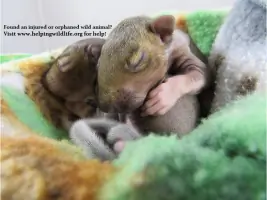
We provide medical care and recovery support for injured, orphaned, or sick Wisconsin wildlife. Our licensed team treats over 3,000 animals annually across 140 species, prioritizing release back to native habitats. Services include emergency admissions, diagnostic assessments, and specialized rehabilitation protocols.
Educational Programs
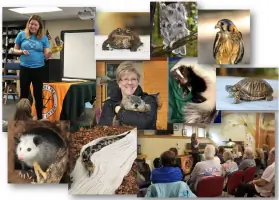
Our curriculum-aligned programs engage students and adults with live animal ambassadors. We deliver over 150 annual sessions covering wildlife adaptation, ecosystem roles, and conflict resolution. Virtual and in-person options accommodate schools, scout groups, and community events with science-based, interactive learning experiences.
Volunteer Training
We offer hands-on training for volunteers assisting with animal care, education, and facility maintenance. Participants learn proper handling techniques, rehabilitation practices, and public engagement strategies. Volunteers play critical roles in daily operations, from admissions to educational outreach programs.
Wildlife Release Program
This initiative relocates unreleasable animals to suitable habitats while supporting landowners in creating wildlife-friendly environments. We partner with property owners to establish safe release zones, focusing on species requiring specialized habitats or human-assisted reintroduction.
Animal Adoption
Our symbolic adoption program funds care for non-releasable animals serving as educational ambassadors. Donors support food, medical treatment, and habitat maintenance for specific species. Adoption packages include educational materials and updates about the sponsored animal's role in outreach programs.
People
Kim Banach
Executive Director
Kim leads WINC's strategic operations with over 20 years of experience in nonprofit management and wildlife conservation. She oversees rehabilitation programs, staff coordination, and organizational growth while maintaining partnerships with state and federal agencies.
Todd Errath
Community Outreach & Philanthropy Officer
Todd manages donor relations and community engagement initiatives. With a background in environmental education, he develops partnerships to expand WINC's public programs and fundraising efforts while promoting wildlife conservation awareness.
Lisa Rowe
Director of Operations & Advanced Wildlife Rehabilitator
Lisa supervises daily clinic operations and complex rehabilitation cases. Her expertise in wildlife medicine ensures high standards of care for over 3,000 annual admissions, combining clinical practice with staff training and protocol development.
Elisa Fosco
Director of Animal Care & Advanced Wildlife Rehabilitator
Elisa oversees animal husbandry and care protocols for WINC's ambassadors and patients. She trains staff in specialized rehabilitation techniques and ensures compliance with licensing requirements for the facility's 140+ species.
Jennifer Bloss
Volunteer Veterinarian
Dr. Bloss provides veterinary care for WINC's patients, diagnosing conditions and developing treatment plans. As a board-certified specialist, she contributes to medical research and trains rehabilitators in advanced wildlife healthcare practices.
Questions
What should I do if I find an injured animal?
Contact us immediately for guidance. We provide instructions for safe handling and transport, or connect you with alternative resources if we cannot admit the animal.
Do you offer educational programs for schools?
Yes! We provide curriculum-aligned programs for grades K-12 with live animal demonstrations. Virtual and in-person options are available, meeting Wisconsin Science Standards.
Can I visit the rehabilitation center?
Public tours are unavailable to reduce animal stress, but our educational area and gift shop are open during business hours for self-guided visits.
How are program fees determined?
Fees depend on distance, program length, and materials required. We offer funding assistance through the Leslie Kiehl Education Program Fund for qualifying groups.
What species do you treat?
We care for all Wisconsin wildlife except skunks. This includes birds, mammals, reptiles, and amphibians, with specialized protocols for over 140 species annually.
How can I support WINC's mission?
Support options include donations, memberships, volunteering, animal sponsorships, and participating in our wish list programs. Every contribution directly aids wildlife rehabilitation and education.
Videos
Reviews (5)
Faye Cronce
Oct 02, 2021
Report
They took in a Flicker that hurt itself slamming into our patio window. Haven't heard how he's doing.
Lisa Mowery
Sep 25, 2021
Report
Very useful wildlife rehab place. I had volunteered with them and I am super excited to become involved with this organization.
Penny Dumanch
Sep 12, 2021
Report
Lovely facility and staff. Have all the confidence they will give the best care to our wild creatures... don't just rely on drop off of animal in need....please donate if you can
Renee Gorton
May 19, 2021
Report
They took really good care of my sugar glider Harley. Very kind and very courteous. They told me what the problem was and how to proceed with the next step.
Denali Bruce
Jan 16, 2020
Report
I have had such amazing experiences here as a volunteer for 5 summers and as someone that has brought three animals in. The staff and volunteers are great and you can tell they really care about helping wildlife.