Business Details
32 Years
experience
Empowering Nuclear Policy Leaders Through Congressional Engagement
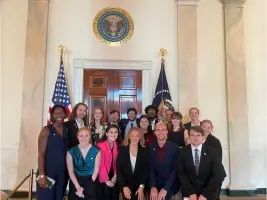
Since 1994, our program has empowered the next generation of nuclear industry leaders by bridging academic expertise with real-world policy engagement. We bring together top students from diverse disciplines including nuclear engineering, public policy, economics, and national security to Washington, D.C., where they develop informed policy positions and directly engage with lawmakers, government officials, and industry leaders. Our unique initiative originated from student advocacy efforts that successfully preserved critical nuclear research funding and has since cultivated a legacy of impactful policy dialogue.With over 180 alumni from prestigious universities now leading in academia, government, and industry, we continue fostering technical-savvy policy understanding through structured meetings with Senators, Representatives, and key technical advisors. Our program's longevity and success reflect its critical role in shaping nuclear science leadership through hands-on political education.
Services
Policy Statement Creation
Congressional Meetings
Nuclear Education Programs
Student Leadership Development
Alumni Networking
Details
- Year established: 1994
Highlights and features
- Pioneered student-led nuclear policy advocacy since 1994
- Diverse delegation representing multiple nuclear-related disciplines
- Hands-on congressional engagement experience with policymakers
- Proven track record influencing national nuclear research funding
- Extensive alumni network in nuclear industry leadership positions
Services
Policy Statement Creation
Students collaborate to formulate technical policy positions addressing current nuclear energy challenges. Our structured process ensures balanced representation of student perspectives while maintaining scientific accuracy. These statements serve as official policy recommendations presented to congressional leaders during annual meetings.
Congressional Meetings
Structured advocacy sessions connect students directly with policymakers. Delegates meet with Senators, Representatives, and committee staff to discuss nuclear research funding, regulatory frameworks, and educational initiatives. This vital exchange fosters understanding between technical experts and legislative decision-makers.
Student Leadership Development
Our program cultivates essential policy communication skills through pre-delegation preparation. Participants receive training in effective technical advocacy, Congressional procedures, and policy negotiation techniques. This comprehensive development transforms academic excellence into actionable policy leadership capabilities.
Alumni Networking
Graduates join an elite network of nuclear professionals spanning academia, government agencies, and industry leaders. The program maintains active alumni connections through specialized networking events and professional development opportunities, reinforcing career pathways in nuclear science and policy.
Nuclear Education Programs
Preparatory programs enhance delegates' understanding of current nuclear policy issues. Industry experts deliver specialized briefings on reactor technologies, fuel cycles, waste management, and emerging research priorities. These sessions ensure participants engage meaningfully with policymakers on complex technical matters.
People
Natalie Cannon
2025 Chair
Graduate researcher in nuclear engineering from Georgia Institute of Technology leading annual delegation coordination and strategic planning efforts.
Chris Forsyth
2025 Co-Vice Chair
MIT doctoral candidate specializing in nuclear materials, responsible for delegate training curriculum and technical policy oversight.
Sarah Cole
2025 Co-Vice Chair
MIT nuclear policy fellow managing congressional relations and coordinating meetings with federal agency representatives.
Questions
What is the Nuclear Engineering Student Delegation?
Annual program connecting top U.S. nuclear students with policymakers to develop and advocate for nuclear energy policies through direct congressional engagement.
How are policy statements developed?
Delegates collaborate during preparatory sessions to create balanced, technically-accurate policy positions representing contemporary student perspectives on nuclear research and energy issues.
Who can participate in NESD?
Current U.S. graduate and advanced undergraduate students from nuclear engineering, health physics, public policy, economics, and related fields.
What happens during the D.C. visit?
Three-day program includes policy briefings with technical experts followed by congressional meetings where delegates present policy statements to legislators and committee staff.